
Vehicle
Customs Clearance
Vehicle customs clearance and documentation are pivotal in the car import and export process, guaranteeing that all regulatory and legal requirements are met and accurately.
At Cyp Automotive, we handle these crucial aspects with precision to facilitate a smooth transaction and avoid any potential delays or issues.
Our 6-step car customs clearance process
Our six-step process meticulously manages car customs clearance and documentation, ensuring accurate handling, timely clearance, and regulatory compliance, avoiding delays and ensuring smooth transactions for a seamless import or export experience.
1: Documentation
Gather all documents, including the Bill of Lading, commercial invoice, Certificate of Origin and any other required licenses.
2: Customs Declaration
Prepare and submit the customs declaration form, detailing the vehicle’s specifications, value, and origin.
3: Duties and Taxes
Calculate and pay any import duties, taxes, and fees based on the vehicle’s value and destination country’s regulations.
4: Regulatory Compliance
Ensure the vehicle complies with local safety, environmental, and emissions standards required by the destination country.
5: Customs Brokerage
To ensure smooth vehicle clearance, we work very closely with customs officials, addressing any challenges or extra requirements that come up efficiently.
6: Final Paperwork
Complete and file any additional paperwork required for finalizing the import or export process, including customs bonds and insurance documentation.
Documentation we manage
Proper paperwork is the backbone of smooth vehicle customs clearance. A single missing or incorrect document can trigger inspections, delays, or penalties. Here’s what we prepare and manage on your behalf:
- Bill of Lading (B/L) — receipt for the vehicle and contract of carriage between shipper and carrier
- Commercial invoice — detailed transaction record including vehicle description, VIN, agreed price, and terms of sale
- Certificate of Origin — certifies the vehicle’s country of manufacture; essential for determining tariff rates and TCA eligibility
- EX1 & EUR1 certificates — customs export documents and preferential origin certificates required for EU trade
- T1 transit document — for vehicles transiting through EU member states under customs supervision
- Import/export licenses — secured as required by the origin or destination country
- Power of Attorney (POA) — authorizes Cyp Automotive to act on your behalf for all customs and registration procedures
- Insurance documentation — coverage verification for transit and customs processing
- Customs bond — financial guarantee that all duties and taxes will be paid and regulations followed
- BPM declaration forms — Dutch registration tax filing for vehicles entering the Netherlands
- RDW/IVA inspection documentation — technical compliance records for the destination country
This structured approach ensures that every aspect of car customs and documentation is handled thoroughly and accurately, with minimal delays and full compliance with all regulations, resulting in a smooth import or export experience.

Why clients choose Cyp Automotive for car customs clearance?
Multi-market expertise from a single point of contact. Unlike brokers who specialize in one corridor, we operate across the Netherlands, the wider EU, the UK, and the UAE — so you deal with one team regardless of where your vehicle is coming from or going to.
Precision before action. Every vehicle receives a complete duty, tax, and compliance assessment before it ships. No surprises at the border, no unexpected BPM bills, no failed inspections.
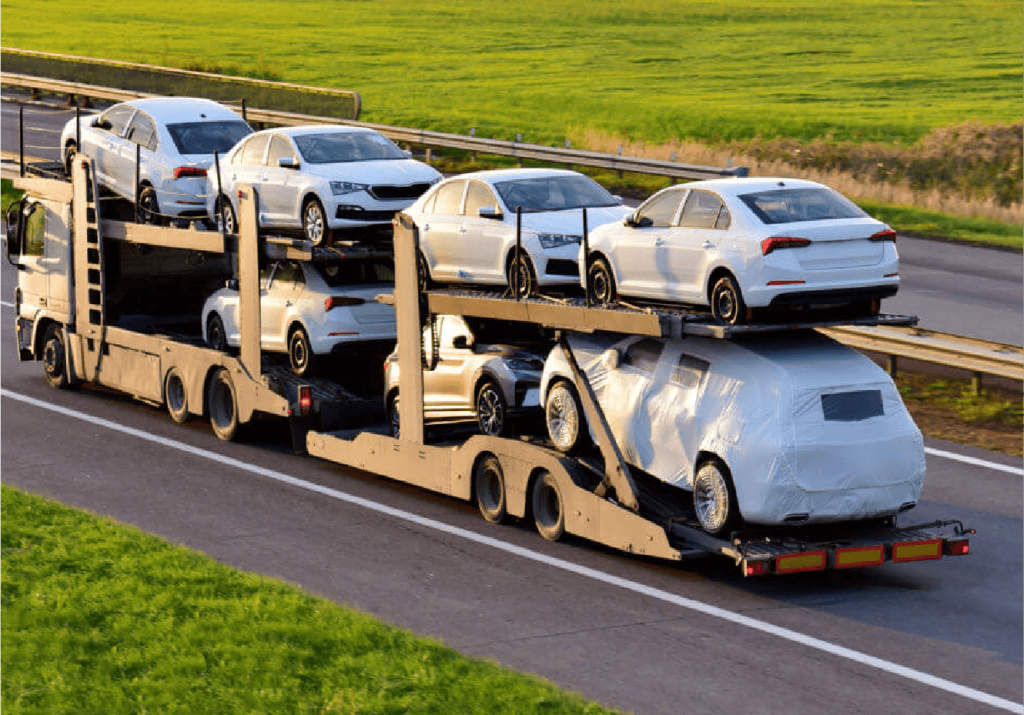
End-to-end service. Customs clearance is just one part of the journey. We also handle vehicle transportation, registration in the destination country, and technical modifications — all under one roof. You can select individual services or opt for the full package from purchase to delivery.
Post-Brexit & international trade specialists. The regulatory landscape changes constantly — new BPM brackets from 2026, evolving UK border controls, shifting EU–UAE trade dynamics. We track these developments so you don’t have to.
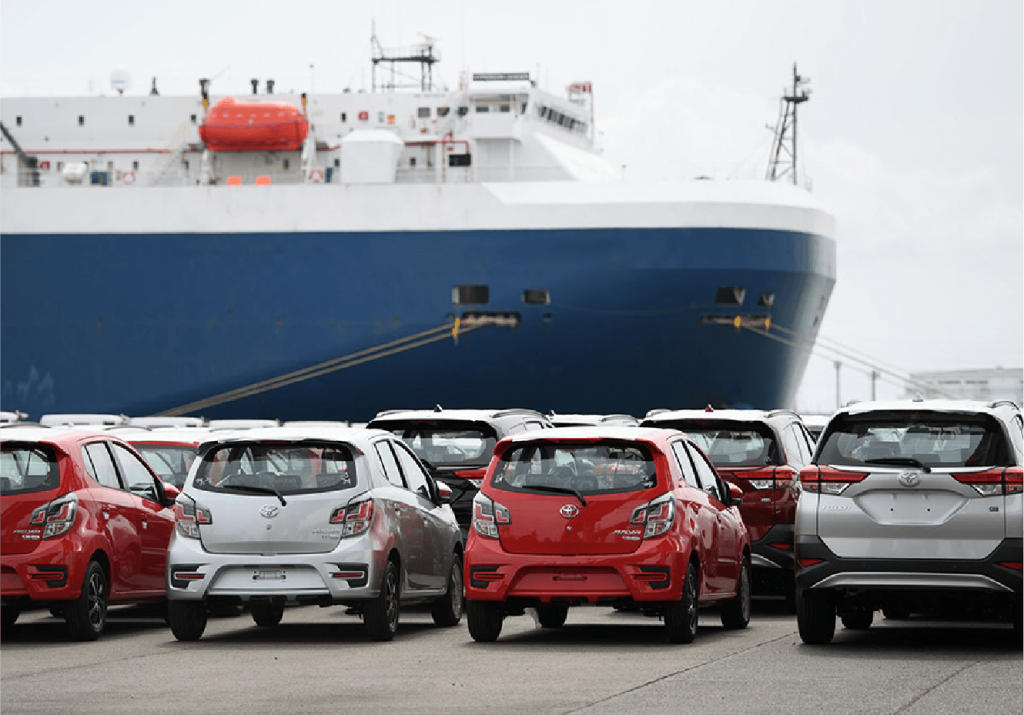
Based in Gouda, the Netherlands, we’re strategically positioned near the Port of Rotterdam and well-connected to UK, EU, and international shipping routes. Our office operates Monday through Sunday, 08:00–23:59, because vehicle imports don’t follow a 9-to-5 schedule.
FAQ
How long does vehicle customs clearance take in the Netherlands?
Customs clearance itself typically takes 24–48 hours when all documents are complete and submitted in advance. The full process — including RDW inspection, BPM declaration, and license plate issuance — usually spans 2 to 4 weeks, depending on inspection availability and any required technical modifications.
What documents do I need for car import customs clearance?
At minimum, you’ll need a Bill of Lading, commercial invoice, and proof of identity. Depending on the origin country and route, additional documents may be required — Certificate of Origin, EUR1 certificate, export certificate, or a customs bond. We provide a tailored checklist once we assess your specific import.
How much does it cost to import a car into the Netherlands?
For a standard non-EU vehicle, expect 10% import duty + 21% VAT on the total value (purchase price + shipping + insurance). BPM is charged separately based on CO₂ emissions and varies per vehicle. Classic cars over 30 years old pay 0% duty and 9% VAT. We provide a precise calculation before shipping.
Do I need to pay import duty when bringing a car from the UK to the Netherlands?
Not necessarily. Under the EU–UK Trade and Cooperation Agreement (TCA), vehicles that meet rules-of-origin requirements qualify for 0% import duty. However, 21% Dutch VAT and BPM still apply. We verify TCA eligibility and prepare the necessary EUR1 documentation.
Can I avoid customs duties if I'm relocating to the Netherlands?
Yes, through the relocation goods exemption (verhuisboedelvrijstelling). You must have lived outside the EU for 12+ months, owned the car for 6+ months, and agree not to sell it within 12 months of import. If eligible, both import duty and VAT are waived. We handle the application process.
What's different about importing a car from the UAE?
Most vehicles in the UAE are built to GCC specifications, which differ from EU standards in areas like lighting, emissions, and instrumentation. About 95% of cars at UAE auctions carry GCC specs. We assess compatibility before purchase and arrange modifications where needed. Shipping from Jebel Ali to Rotterdam takes approximately 28–36 days.
Do you handle customs clearance for vehicles going to the UK?
Yes. We manage the full Dutch export side — customs declaration, T1 transit, EUR1 certificates — and coordinate with UK-based agents for HMRC clearance, IVA testing, and DVLA registration. Whether you’re sending a vehicle from the Netherlands to England, Scotland, or Wales, we ensure a smooth handover at the border.
Can you handle customs for countries outside the EU and UK?
Absolutely. While our highest volume is within the Netherlands, EU, UK, and UAE corridors, we have an established network of customs partners across the USA, Canada, the Middle East, and Asia. Contact us with your specific route, and we’ll provide a tailored plan.

